

The aviation industry is built on precision, safety, and teamwork. While technical knowledge is essential for pilots, cabin crew, ground staff, and airport professionals, employers also place great importance on soft skills. The ability to communicate effectively, work under pressure, and provide exceptional customer service often determines how successful an individual will be in an aviation career.
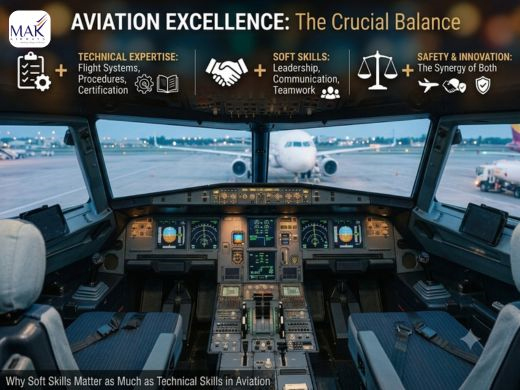
Whether you aspire to become a pilot, cabin crew member, ground handling executive, or airport operations professional, developing strong soft skills can give you a competitive advantage during recruitment and throughout your career.
What Are Soft Skills in Aviation?
Soft skills are personal and interpersonal abilities that help professionals interact effectively with passengers, colleagues, and stakeholders. Unlike technical knowledge, these skills focus on communication, behaviour, professionalism, and emotional intelligence.
In aviation, where teamwork and passenger satisfaction are critical, soft skills are just as important as technical expertise.
Why Are Soft Skills Important?
Aviation professionals often work in fast-paced and high-pressure environments where quick thinking, clear communication, and professionalism are essential. Airlines seek candidates who can remain calm under pressure, resolve conflicts, and deliver excellent customer service while maintaining safety standards.
Benefits of Strong Soft Skills Include:
- Better communication with passengers and colleagues
- Improved confidence during interviews
- Enhanced customer service experience
- Strong teamwork and coordination
- Effective problem-solving under pressure
- Professional workplace behaviour
- Greater career growth opportunities
Essential Soft Skills for Aviation Professionals:
A successful aviation career requires a combination of technical knowledge and personal development. Some of the most important soft skills include:
Effective verbal and written communication
- Leadership and teamwork
- Time management
- Adaptability and flexibility
- Customer service excellence
- Professional grooming and etiquette
- Emotional intelligence
- Decision-making and problem-solving
- Stress management
- Cultural awareness and interpersonal skills
Who Should Focus on Soft Skill Development?
Soft skills are valuable for:
- Commercial Pilot aspirants
- Cabin Crew candidates
- Ground Handling professionals
- Airport Customer Service Executives
- Aviation management students
- Fresh graduates entering the aviation industry
Why Choose MAK Airways?
At MAK Airways, we understand that technical knowledge alone is not enough to build a successful aviation career. Our training programs combine industry-specific education with personality development, communication training, interview preparation, and professional grooming to help students become confident, competent, and industry-ready.
Our experienced trainers provide practical learning through group activities, role plays, mock interviews, and real-world aviation scenarios that prepare students for the expectations of airlines and airport operators.
Conclusion
Success in aviation is not measured solely by technical expertise—it is also defined by professionalism, communication, and the ability to work effectively with people. Strong soft skills enable aviation professionals to build trust, deliver exceptional service, and perform confidently in demanding environments. By investing in both technical training and personal development, aspiring professionals can enhance their employability and build a rewarding, long-term career in one of the world’s most dynamic industries.